


Find Out If Proton Therapy May Be Right for You
No referral required. Our team can help review your diagnosis and insurance coverage.
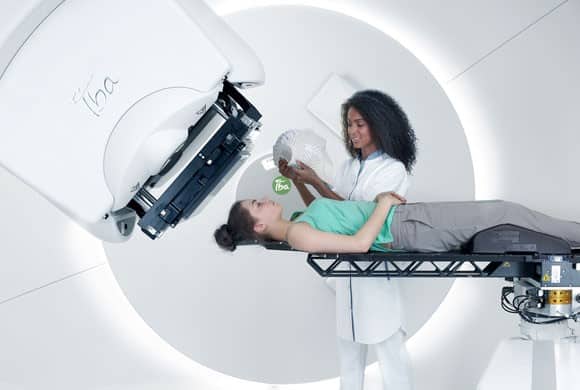
Precise Treatment Designed Around You
Proton therapy and traditional radiation therapy both treat cancer by damaging cancer cells so
they cannot continue to grow. The difference is how they deliver radiation.
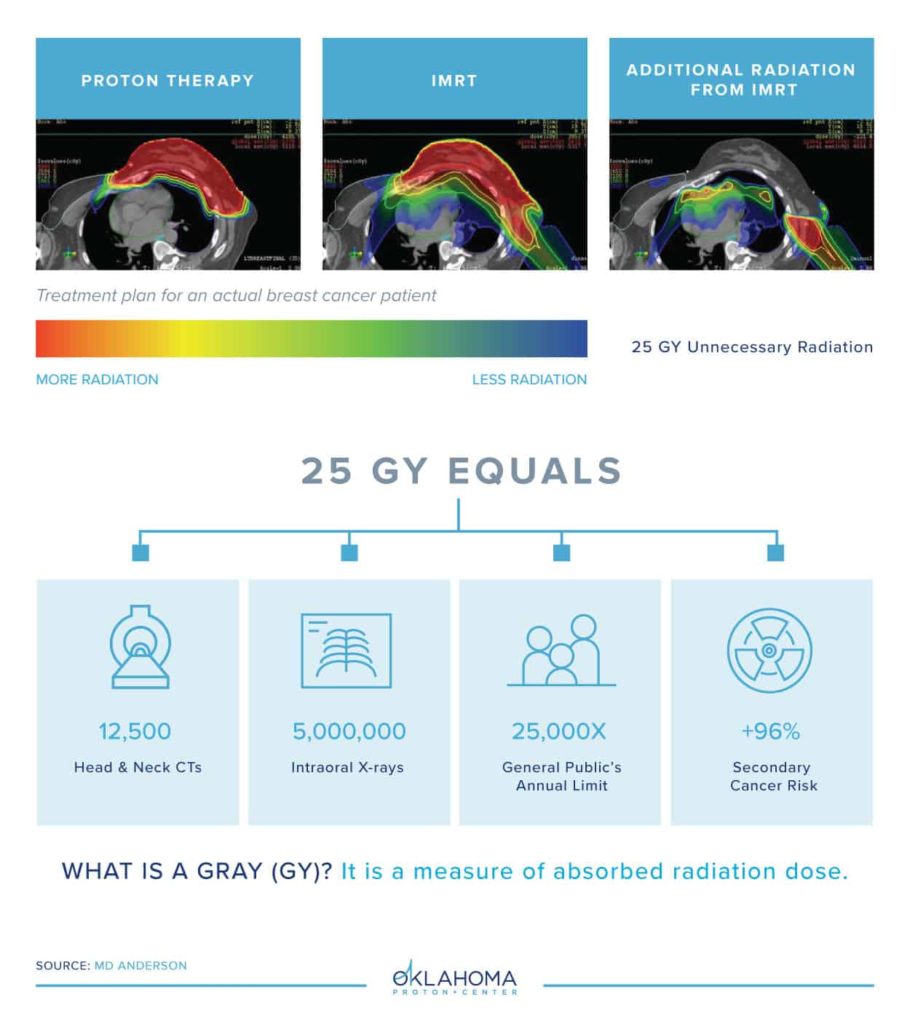
Proton therapy can be planned to deposit most of its radiation dose directly within the tumor,
with little or no exit dose beyond it. This may reduce radiation exposure to nearby healthy organs and tissue. Depending on the diagnosis and tumor location, reducing that exposure may help decrease certain short- and long-term side effects.
Proton therapy is not necessarily the right choice for every patient. Our radiation oncologists
evaluate each case individually and recommend treatment based on the patient’s diagnosis,
anatomy and clinical needs.
HOW DOES PROTON THERAPY WORK?
Protons enter the body with a relatively low radiation dose and release most of their energy at a planned depth called the Bragg peak. Radiation oncologists can adjust that depth and combine
multiple proton beams to conform the treatment dose to the tumor.
Because the beam can be planned to stop after reaching its target, proton therapy can reduce unnecessary radiation beyond the tumor. This can be especially valuable when a tumor is close to the brain, spinal cord, heart, lungs or other important structures.
A simple proton-versus-X-ray visual should accompany this section. The current video can remain, but the page should not rely on video to communicate the essential explanation.
Who May Benefit from Proton Therapy?
Proton therapy may be considered when:
- The tumor is near a sensitive organ or critical structure.
- Reducing radiation to healthy tissue is particularly important.
- A patient previously received radiation near the same area.
- The treatment requires a complex or highly precise radiation plan.
- A child or younger patient may face decades of potential long-term effects.
- The physician wants to safely deliver an effective dose while limiting exposure outside
- the target.
Whether proton therapy is appropriate depends on the cancer type, stage, location, prior
treatments and other individual factors. A consultation with a radiation oncologist is the best way
to determine whether it should be considered.


why proton therapy is different:
Protons and X-rays both destroy cancer cells by preventing them from dividing and growing. Protons are energized particles that deliver radiation at exact depths to precisely target tumors. Because protons deposit a majority of the radiation dose at the tumor site and travel no further through the body, the surrounding healthy tissue is spared. X-rays, on the other hand, release their maximum dose of radiation quickly after penetrating the skin, potentially damaging healthy tissue and organs on their way to the tumor site and as they continue to pass through the body.
Find Out if Proton Therapy is Right for You
"*" indicates required fields