


Kaiden’s Story

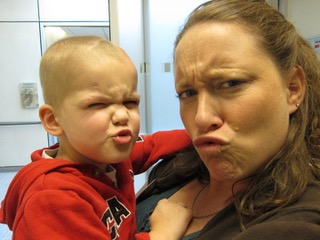
At 2 years old, the future isn’t something you think about.
It lives in small things—favorite toys, familiar voices, the steady rhythm of being cared for. So when a diagnosis arrives, something as heavy and unfamiliar as brain cancer—it is not the child who first understands its weight.
It is everyone else.
Families begin to think in timelines. In outcomes. In all the moments that could be altered or lost. Days become structured around appointments, and waiting. There is a constant, recalibration. Learning how to hold fear without letting it take over, how to stay present for a child who still needs comfort, play, normalcy. And beneath all of it the question: What will his life look like beyond this?
Kaiden’s story begins there.
Diagnosed with a Primitive Neuro-Ectodermal Tumor (PNET) brain tumor as a toddler, his family faced not only the urgency of treating the disease, but the complexity of where it lived. The brain, still growing, still forming—holds the blueprint for learning, memory, personality, and development. Treating it requires precision, not just to save a life, but to protect the life still unfolding.
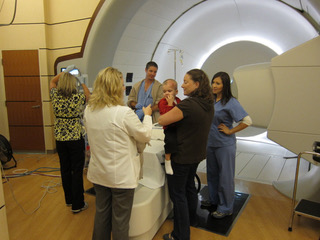
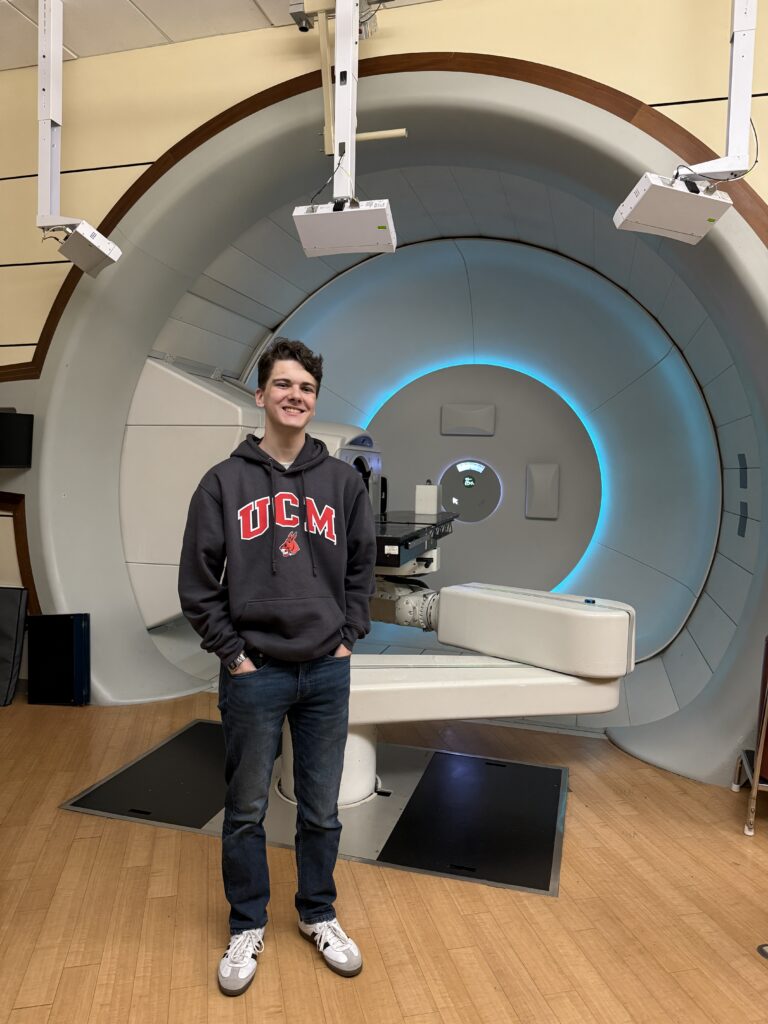
That path led them to the Oklahoma Proton Center, where Kaiden received proton therapy.
Unlike traditional radiation, which passes through the body and can affect healthy tissue beyond the tumor, proton therapy is designed to stop at the tumor site. This allows doctors to deliver radiation with remarkable precision, reducing unnecessary exposure to surrounding areas.
For children, that difference matters.
It means helping preserve cognitive function.
It means protecting the ability to learn, grow, and develop.
It means treating the cancer while safeguarding who the child is becoming.
For the staff who walk alongside pediatric patients and their families, there is another layer entirely. Caring for children in moments like these is both a privilege and a weight. At the end of the day, many return home to their own healthy children, aware of the contrast. Gratitude intertwined with something more complicated, something that can feel like guilt. It is rarely spoken aloud, but it stays with them, shaping how they return each morning with deeper focus, greater care, and a clear understanding of what is at stake.
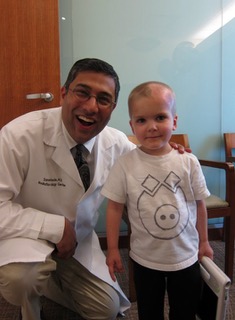
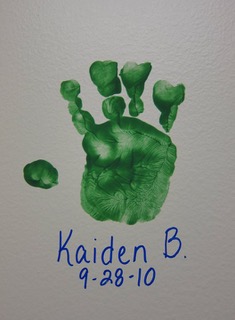
In September 2010, Kaiden completed treatment, graduating from the Oklahoma Proton Center. At the time, it was a milestone defined by strength, though much of it would live in the memories of his family and care team rather than in his own.
Because childhood moves forward, even after something that asks it to pause.
But life after treatment does not simply return to what it was before.
There is a lingering awareness that never fully leaves. A voice in the background asking questions no one can answer with certainty. Follow-up appointments carry their own kind of gravity, marked by anticipation that builds in the days leading up to them. Scans, check-ins, the careful watching. Even in the midst of ordinary life, there is a subtle recalibration—learning how to move forward while holding the knowledge of what has already happened.
Life continues, whether you feel ready or not.
And so it unfolds in layers. School years pass. Friendships form. Interests take shape. The structure of adolescence builds itself, slowly, around a past that is never entirely absent, but no longer defines every moment.
Until one day, it leads to something simple and profound:
Kaiden graduated from high school.
A milestone shared by many, but never guaranteed.
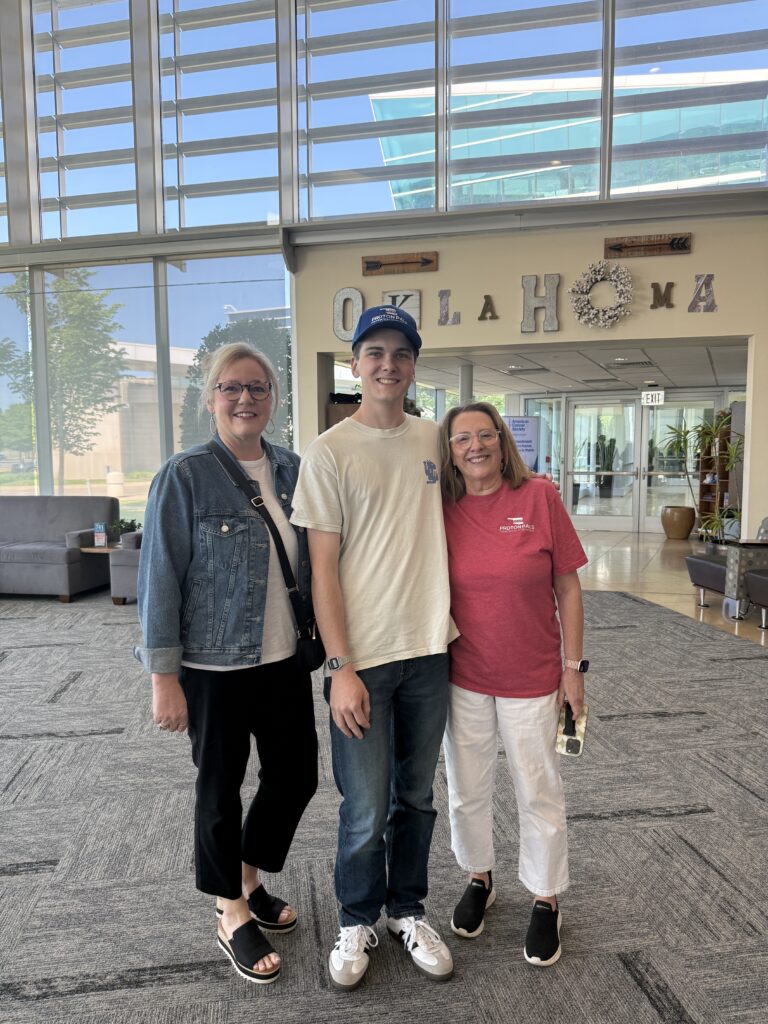
Recently, he returned to the Oklahoma Proton Center, this time not as a patient, but as a young man standing on the edge of his next chapter. In a moment that felt celebratory and personal, Kaiden was awarded the first annual Proton Pals Foundation Scholarship.
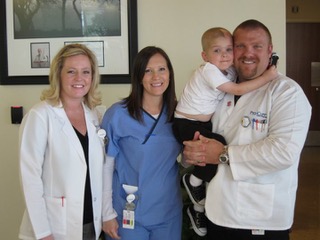
Some of the very staff members who had been part of his care team when he was a toddler returned to present it to him. Faces that once stood beside his family during uncertain days, now gathered to recognize how far his life had carried forward. There was laughter. Familiarity. And a sense of something coming full circle.
But more than anything, there was recognition. Not just of what he overcame, but of what was preserved.
This fall, Kaiden will head to college.
It’s a sentence that sounds ordinary. But within it is something extraordinary: a future that was carefully protected, step by step, during a time when nothing felt certain.
His story isn’t defined only by survival.
It’s defined by possibility.
By the life that continued to take shape in the years after treatment.
By the milestones that followed.
By the powerful truth that sometimes the most important outcomes are the ones that allow a life to keep moving forward.
Not just a story of what was overcome—
But of what was safeguarded, and allowed to become everything it was meant to be.

For those facing a cancer diagnosis, the Oklahoma Proton Center offers more than advanced treatment—it offers a team deeply committed to both outcomes and quality of life. As a leading provider of proton therapy, the center delivers highly precise radiation designed to target tumors while minimizing exposure to surrounding healthy tissue. That precision can make a meaningful difference not only during treatment, but in the years that follow. Here, care is guided by both expertise and empathy, grounded in the belief that every patient’s future is worth protecting.